
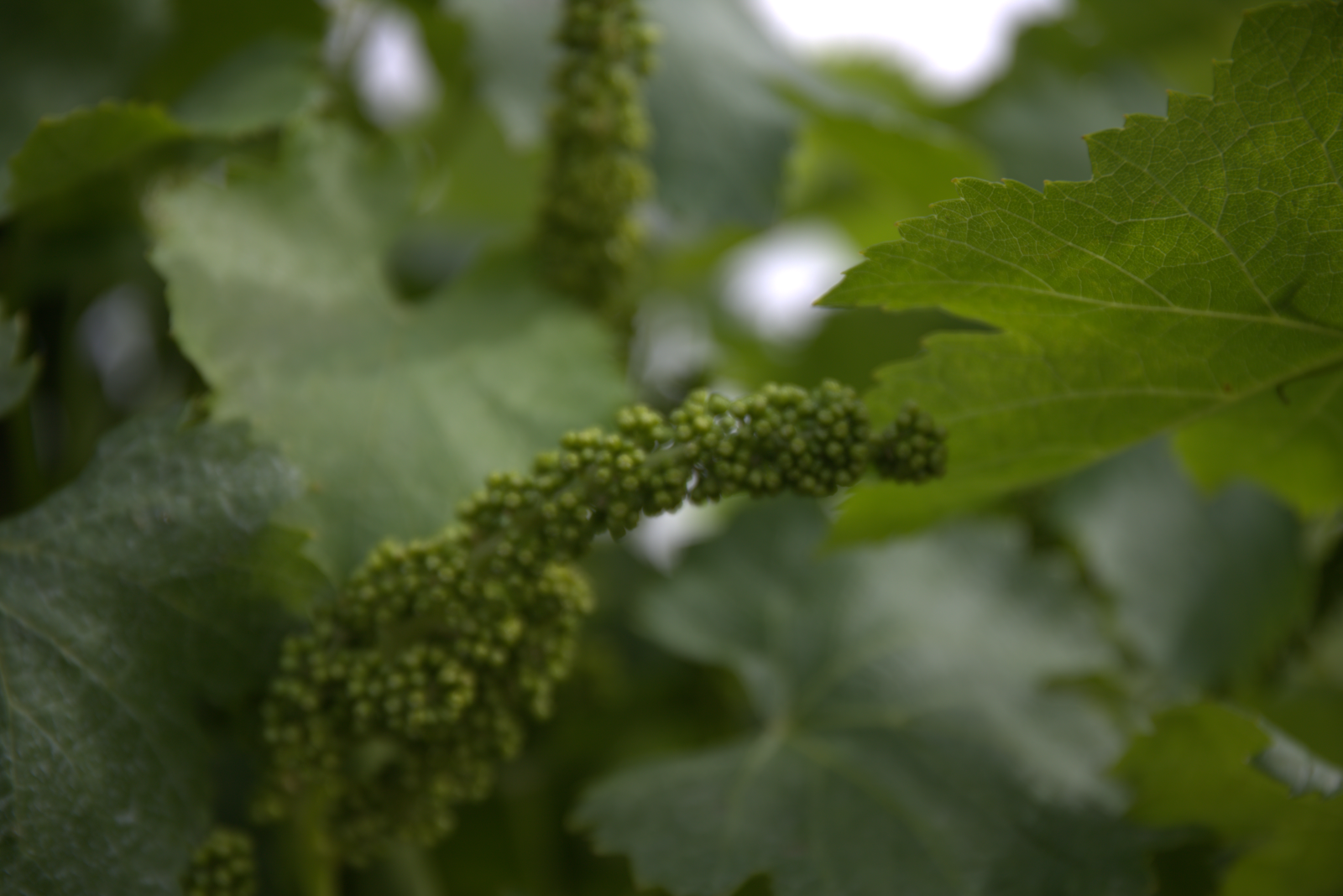
May is the month when the vineyard speeds up. The shoots that were still fragile in April now grow fast, and the canopy turns dense within a few days. But the most delicate moment is another: flowering. It is a brief, almost invisible phase that decides how much and how each plant will produce.
For us May is also the month when we work on two fronts at once. In the vineyard we spray and we observe. In the cellar we bottle. Two different rhythms that overlap and demand constant attention.
Flowering: a few days that decide the vintage
The flowering of the vine is not spectacular. There are no colourful petals, no obvious scents. The flowers are small, greenish, almost invisible among the leaves. And yet it is in this phase that fruit set is decided — that is, how many flowers will become berries.
Here in Santa Palomba flowering usually begins in the second half of May. The white varieties — Malvasia Puntinata, Grechetto, Malvasia di Candia — flower first. Among the reds, Merlot is early, Montepulciano comes later. Syrah sits in the middle, as it often does.
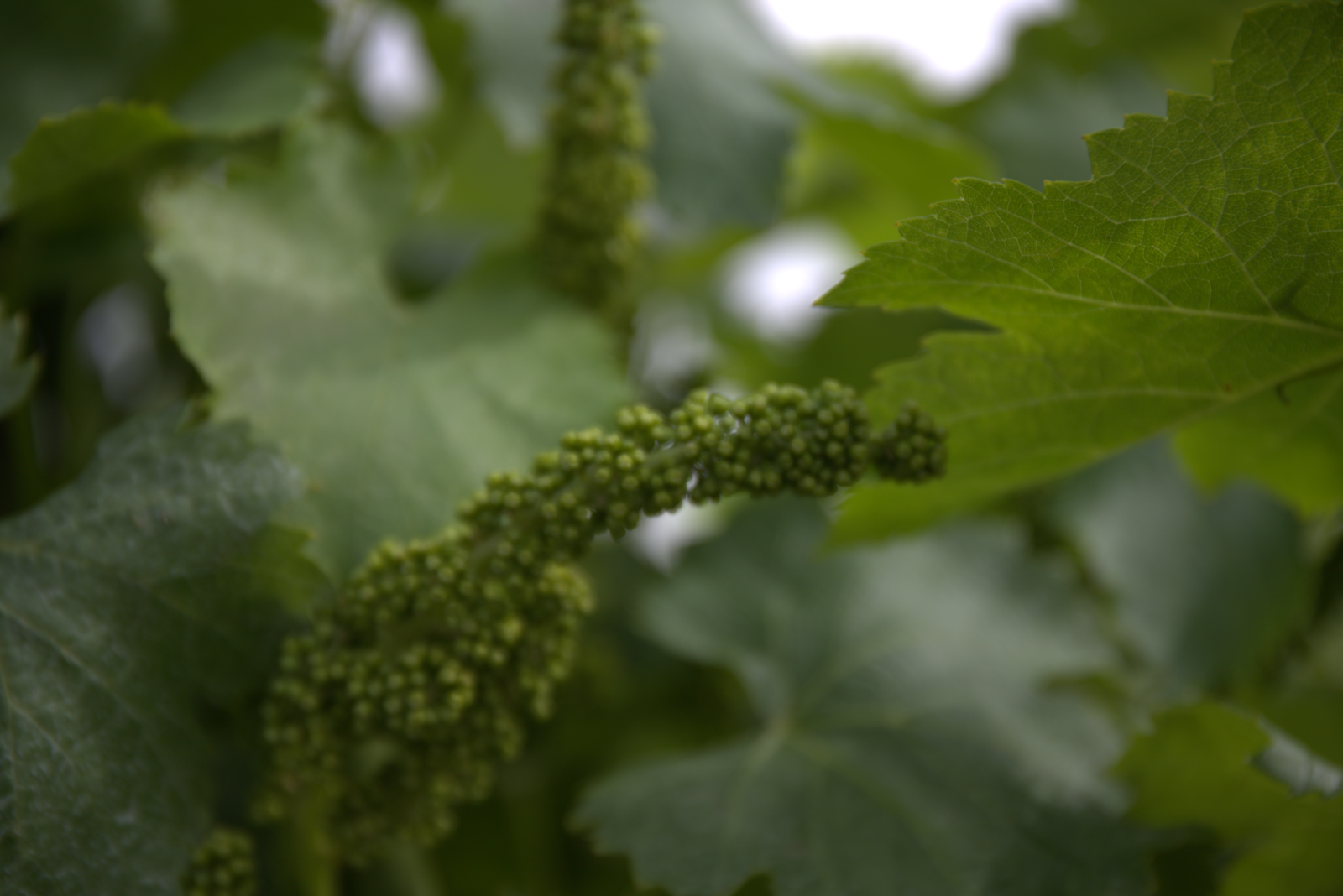
Flowering needs precise conditions. Stable temperatures, no heavy rain, low humidity. Wind is a problem if it is too strong. Rain is a problem if it comes at the wrong moment. A single storm on the day of flowering is enough to reduce fruit set, and therefore the crop.
There is nothing we can do to control these factors. We can only have prepared the plant well in the previous months and weeks. An airy canopy, a balanced bud load, a healthy leaf system: all this helps the vine face flowering in the best possible conditions.
Treatments: copper and sulphur, by the organic rules
With the canopy in full growth and spring humidity still present, May is the most critical month for crop protection. The two main enemies are the usual ones: downy mildew and powdery mildew.
We have been certified organic since 2004. The products we use are copper and sulphur, the only ones allowed by the rules against these two fungal diseases.
Copper works against downy mildew. It is a coverage treatment: it protects the surface of the leaf and cluster before the fungus can penetrate. That is why timing is essential. You treat before the rain, not after. If the copper is washed off, the treatment has to be repeated. Too early and you waste product. Too late and the damage is done, or you are forced to treat at unsuitable moments.
Sulphur works against powdery mildew. It has a different mechanism: it acts by evaporation, so temperatures must be high enough for it to work, but not so high as to risk scorching the canopy. In May the conditions are almost always favourable.
The doses we use are modest. The organic rules set an annual copper limit per hectare and we always stay well below it. This is possible because the work done over winter — balanced pruning, correct tying, canopy management — reduces the conditions that favour fungi. An airy row dries faster after rain. An orderly canopy lets the treatment reach every surface. Crop protection doesn’t start in May. It starts in January, and continues from the moment the shoots have just opened.
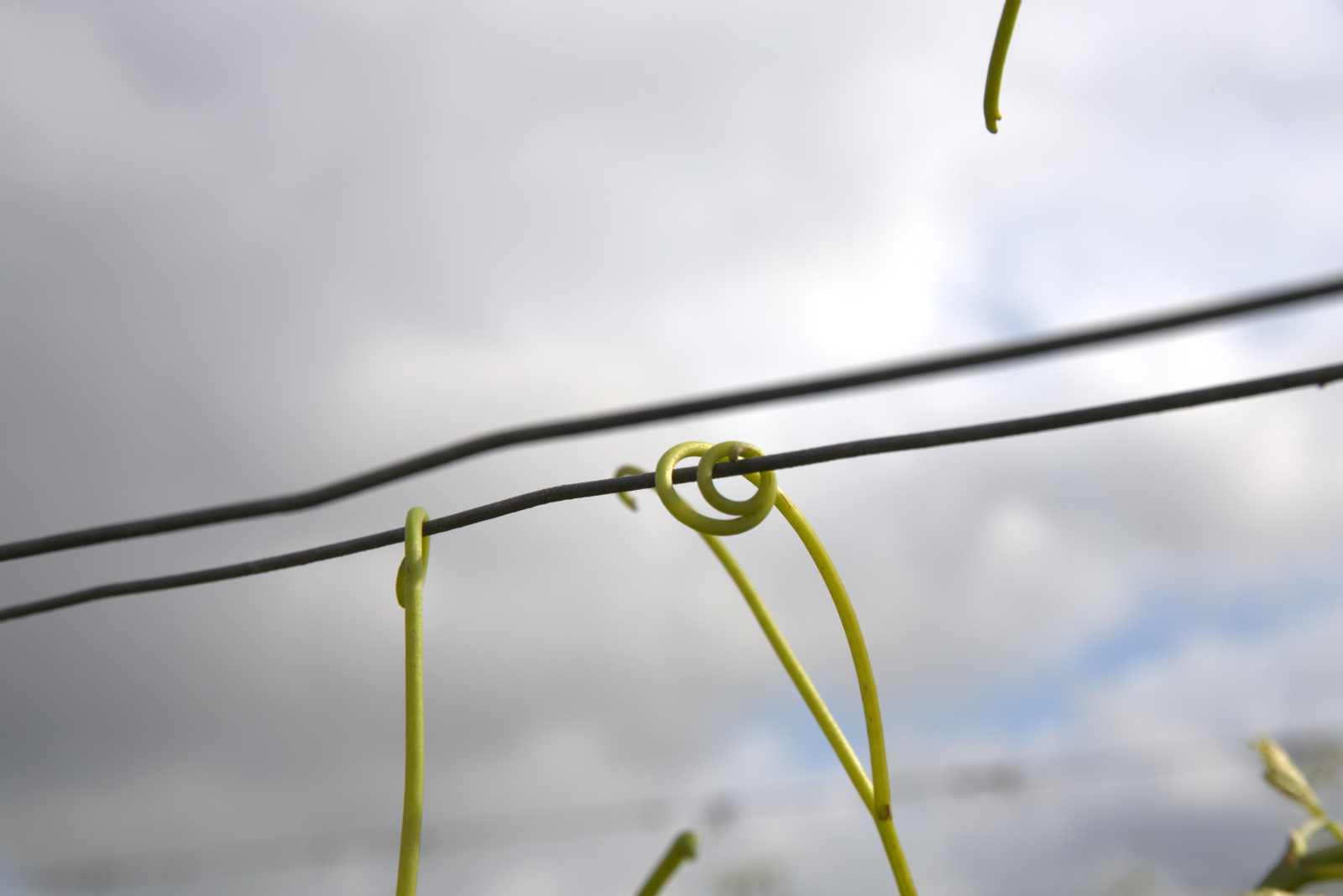
In this period the trips with the sprayer are frequent. It depends on the weather. After every significant rain we assess whether to act. We don’t follow a fixed calendar. We look at the sky, check the forecast, walk among the rows to check the state of the canopy. Every decision is taken day by day.
Volcanic soil as an ally
The soil of Santa Palomba helps us. The pozzolanic, mineral structure of the soil drains rain quickly. That means less stagnant humidity between the rows, fewer conditions favourable to downy mildew, and the ability to enter the vineyard with machinery — also thanks to the grassing of the rows — even after the heaviest rainfall.
This is no minor detail. In many parts of Italy organic estates struggle to treat in time because the wet ground won’t let the tractor through. For us this problem is rare. The volcanic soil is a concrete advantage that translates into more responsive, timely management.
In the cellar: bottling the whites
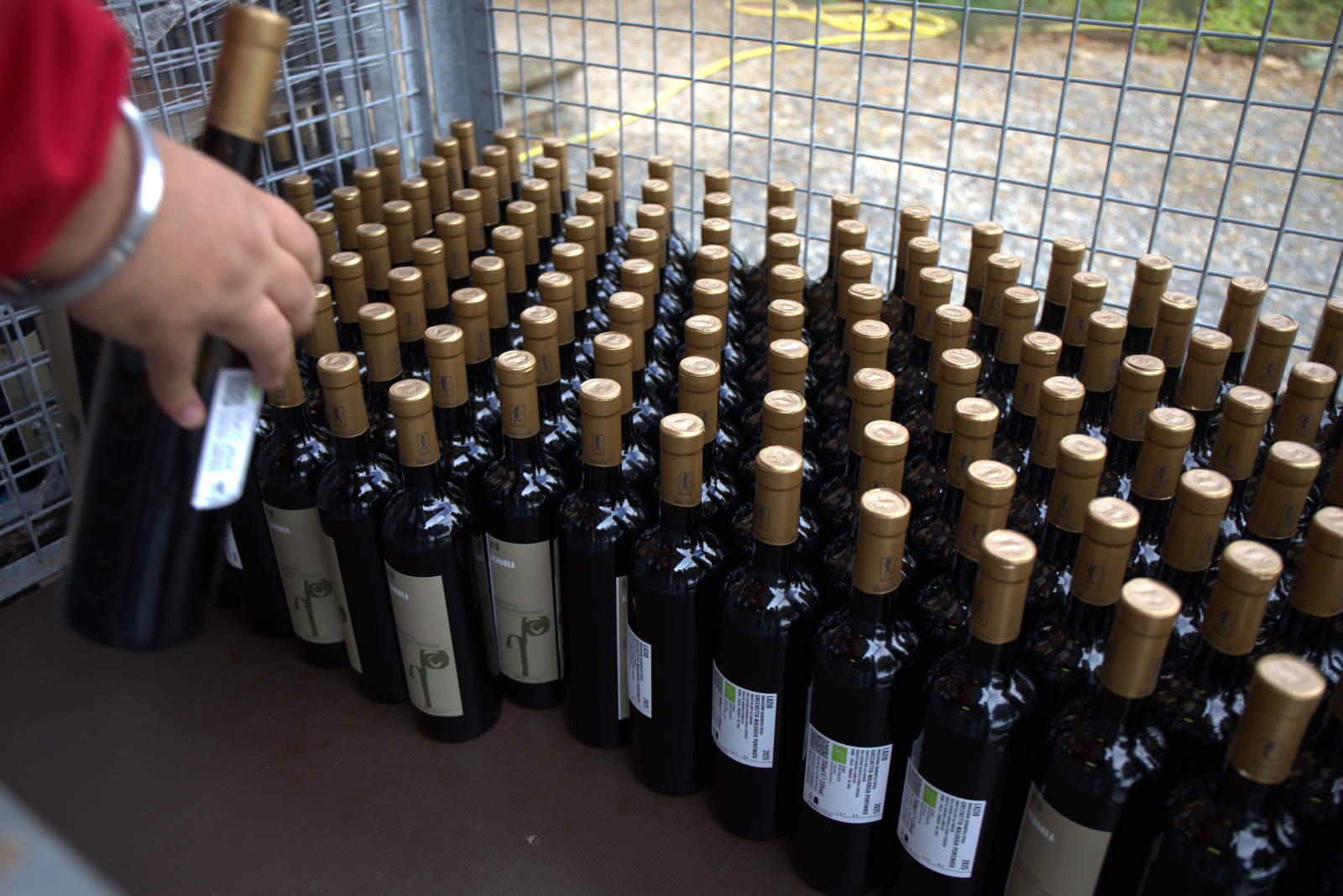
While the vineyard flowers outside, inside the cellar the white wines of the 2025 harvest are ready to be bottled.
Bottling is a step that seems simple but requires precision. It starts with the final analyses: we check the wine’s stability, verify the parameters, take the last tastes. Only when everything is right do we go ahead.
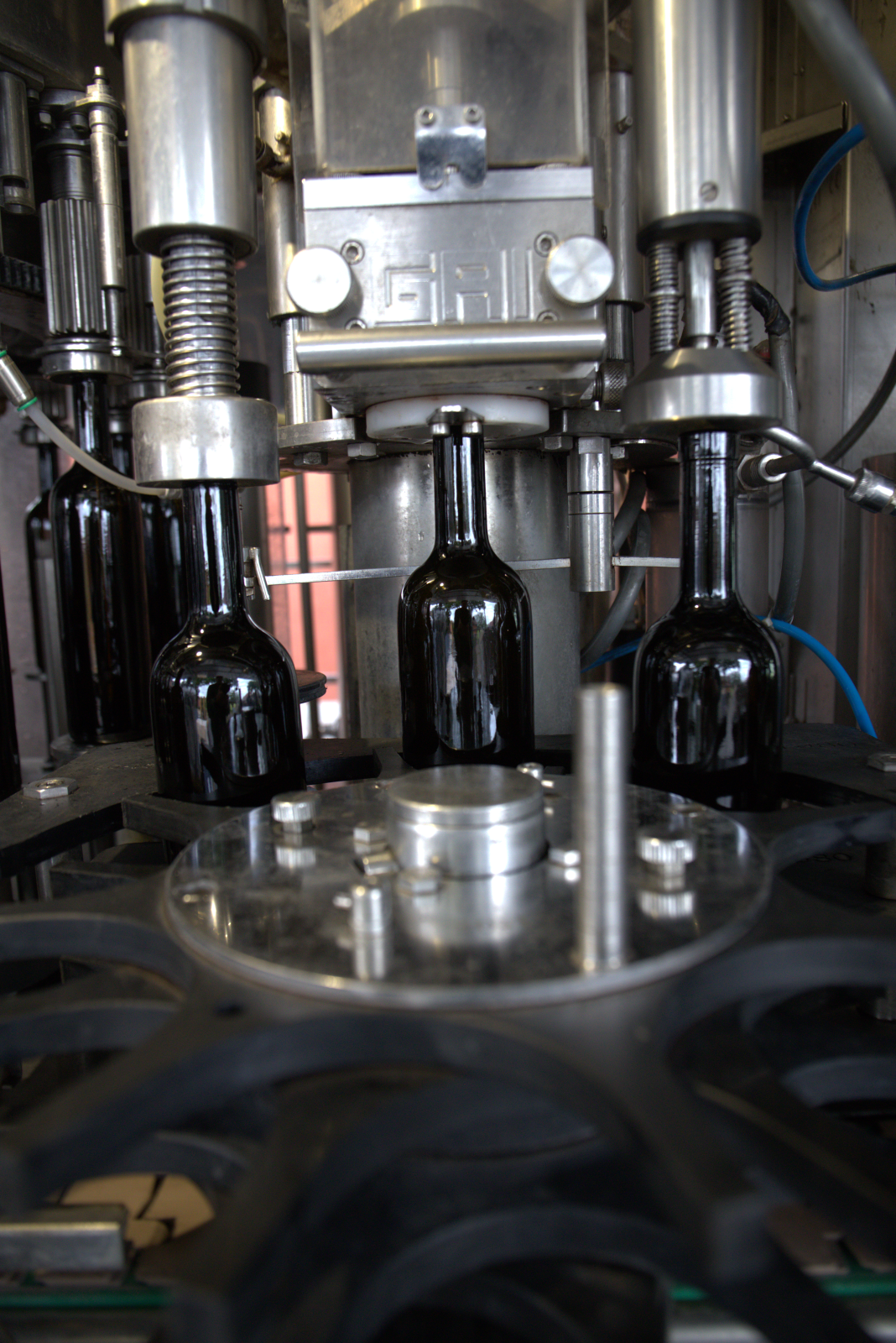
Our whites are bottled without heavy filtration. Ageing in steel preserves freshness and varietal character. Sulphites are kept to the minimum necessary. We don’t chase wines that are perfect in the technical sense. We look for wines that are faithful to the vintage and to the land they come from.
Malvasia Puntinata is the heart of our white production. After months in steel, the wine has found its balance. The Grechetto and the Trebbiano are ready too. Each tank has followed its own timing, with no forcing.
Bottling takes place on carefully chosen days. We avoid days that are too hot. We work early in the morning, when temperatures are lower and the wine suffers less from the move from tank to bottle.
Two jobs, one logic
May asks us to split our energy between vineyard and cellar. But the logic is the same in both cases: observe, wait for the right moment, act only when needed.
In the vineyard this means treating with good timing and not out of habit or set calendars. In the cellar it means bottling when the wine is ready, not when the calendar suggests it.
It is not a quiet month. The days are long, the decisions pile up, the margin for error shrinks. But it is also the month when you see the result of the work done in the previous months. A well-tended vineyard faces flowering with strength. A wine followed with patience goes into the bottle the right way.
May is the month when things meet. The new season takes shape among the rows. The old vintage finds its final form inside the glass. And we stand in the middle, doing what we always do: looking, deciding, working, and stepping in only when it’s necessary.